A lyophilized peptide is stable, not indestructible. What degrades the powder is chemistry, and that chemistry depends on the sequence. Why lyophilize? gives the three basic rules; this article goes one layer deeper.
Why peptides degrade
Manning and colleagues set out in Pharmaceutical Research (2010) the routes along which peptides and proteins change chemically. Four of them matter most for a stock in the lab:
- Oxidation. Sulfur-containing and aromatic side chains react with oxygen. Methionine, cysteine and tryptophan are the most sensitive.
- Deamidation. Asparagine and glutamine lose their amide group. The peptide gains a negative charge and a mass about one unit higher.
- Hydrolysis. Water breaks a bond in the chain; the peptide falls into shorter pieces.
- Disulfide exchange. In a peptide with cysteines, a bridge can open and close again in a different place. The mass stays almost the same, the structure does not.
Which route applies to which peptide can be read from the sequence. Three examples from this catalogue, with the sequences as PubChem gives them:
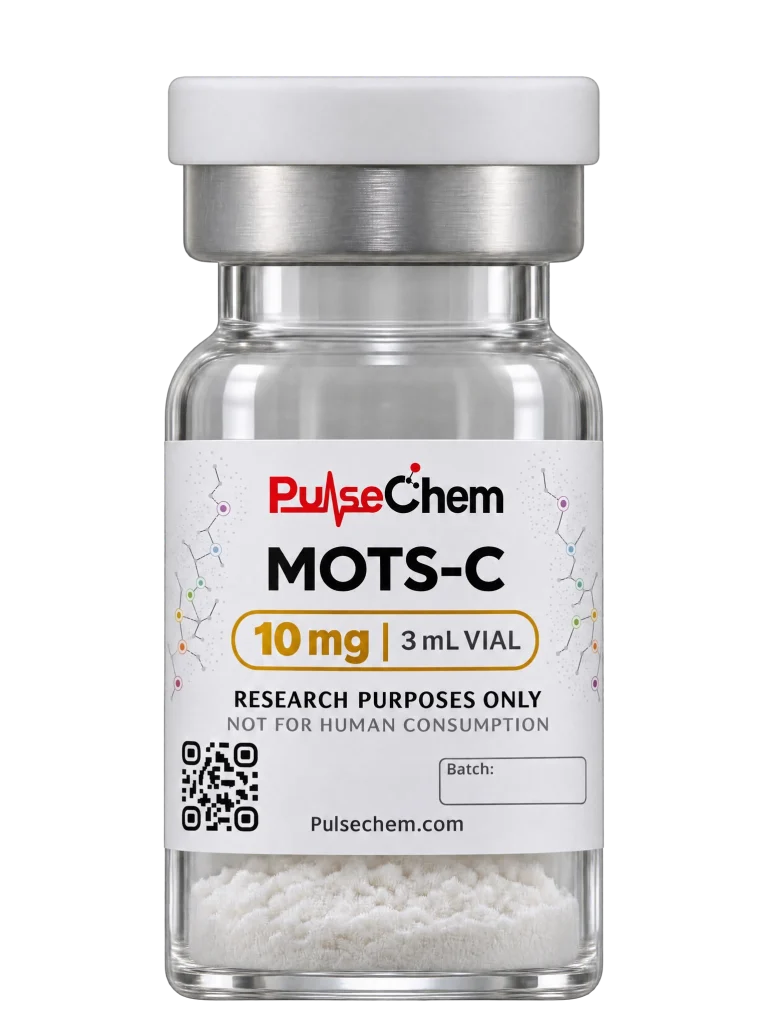
- MOTS-c has two methionines (positions 1 and 6) and a tryptophan at position 3: three sites open to oxidation.
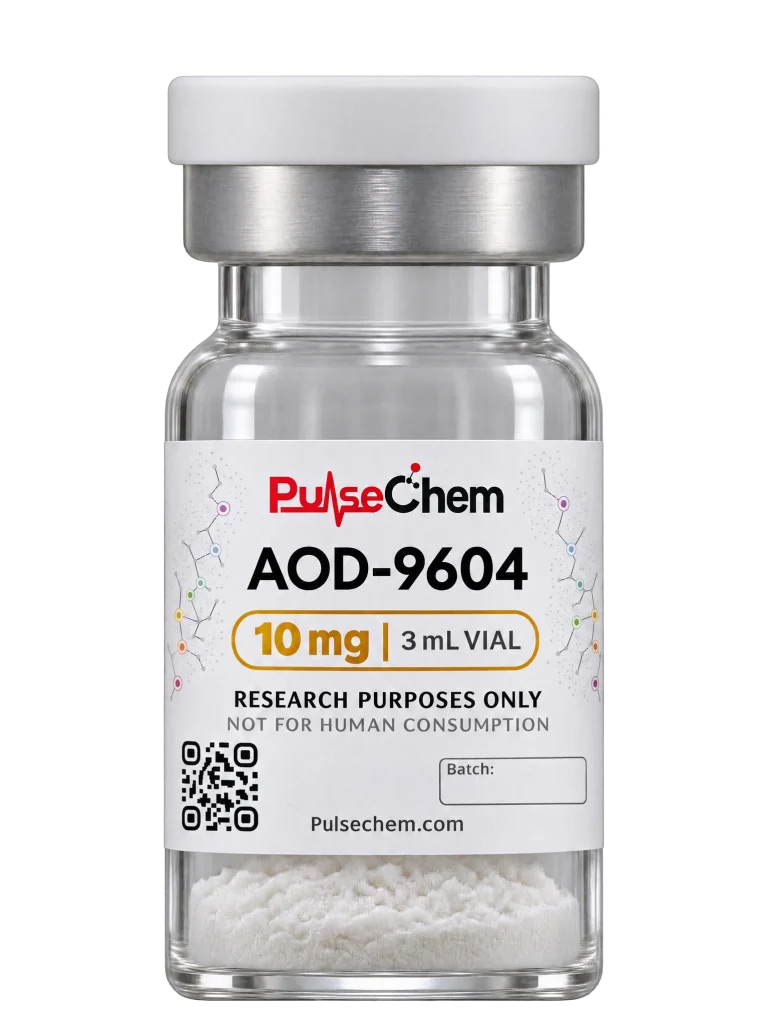
- Oxytocin has a disulfide bridge between Cys1 and Cys6, and AOD-9604 one between Cys7 and Cys14. For those two, disulfide exchange is a point of attention.
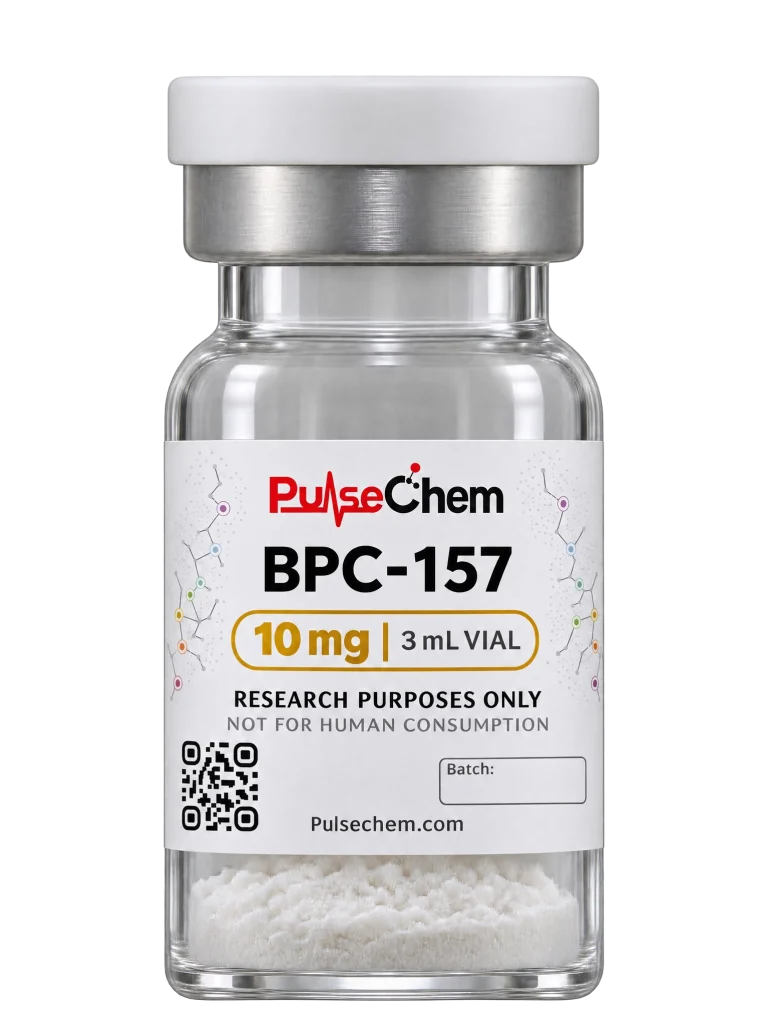
- BPC-157 carries two aspartic acids side by side at positions 10 and 11, a motif that also needs extra care during synthesis.
All four routes need water, heat or oxygen. That is why storage comes down to keeping out exactly those three.
Temperature
Follow the temperature on the label and on the certificate of analysis. For lyophilized material the recommended temperature differs per compound and per supplier, and a general figure from a forum says nothing about your batch. If the label gives no temperature, ask the supplier and record the answer in your lab notebook.
One thing always holds: cooler is quieter. Every chemical reaction runs more slowly at a lower temperature, and the powder does not need to follow the temperature swings of a bench.
Moisture and light
Lyophilized peptide is hygroscopic: it draws water out of the air, and water is the precondition for hydrolysis and deamidation. So keep the vial closed and keep the time it stands open short. If there is a desiccant sachet in the packaging, leave it with the vial.
Let a cold vial reach room temperature before you open it. Moisture from the air condenses on cold glass, and that moisture ends up in the powder. Keep the material dark as well: aromatic side chains such as those of tryptophan and tyrosine absorb light, so do not leave a vial in the sun or under a lamp.
Freezing and thawing
Every time a vial warms up and cools down again, moisture gets a chance to condense and the material takes another temperature cycle. So do not take the whole stock out of the freezer when you need one vial. If you work regularly from the same batch, it is better to split the material into smaller units so that the rest stays undisturbed. Note the date each time a vial leaves storage; then you can see later how many cycles it has had.
Receiving a shipment
Check a shipment on arrival, before you put the material away. Look at whether the packaging is intact, whether the number of vials and the strengths match the order, whether the batch number on the label matches the certificate, and whether a cold pack still feels cold if one was included.
PulseChem ships the vials in insulated packaging with protective material and adds a cold pack in warm weather or when transit takes longer; that is set out on Shipping and returns. The same page states what to do about damage: report it within 48 hours with the order number and photos of the packaging and the product, and keep the packaging.
A cake that has come loose or crumbled is not damage. A few milligrams of powder is very little material and can detach from the bottom during transport.
Record keeping
Storage can only be verified if it is written down. Note per vial:
- the batch number from the label;
- the date of receipt and the date the vial was first opened;
- the place in storage, with the temperature of that place;
- the date of analysis from the certificate, and a retest or use-by date if the label or the certificate gives one.
That way you can tie a result to a batch later on, and when something deviates you can work out whether the material or the experiment is the cause. The certificate for your batch is on the product page and on Lab results.
About solutions there is only one sentence to add here: how long a solution stays usable depends on the compound and the solvent, so record when it was made and how it was kept. This article gives no preparation instructions; all products are strictly for in vitro laboratory research (RUO explained).
Further reading: Why lyophilize? for freeze drying itself, How are peptides made? for where impurities come from, and How to read a mass spectrum for the mass shifts that go with oxidation and deamidation.
Sources
Accessed in November 2026.
- Manning M.C., Chou D.K., Murphy B.M., Payne R.W., Katayama D.S. (2010), Stability of protein pharmaceuticals: an update, Pharmaceutical Research (PubMed), PMID 20143256: the chemical routes oxidation, deamidation, hydrolysis and disulfide exchange
- MOTS-c (PubChem), CID 146675088: the sequence with methionine at positions 1 and 6 and tryptophan at position 3
- Oxytocin (PubChem), CID 439302: the disulfide bridge between Cys1 and Cys6
- AOD-9604 (PubChem), CID 71300630: the disulfide bridge between Cys7 and Cys14
- BPC-157 (PubChem), CID 9941957: the sequence with Asp10 and Asp11
This article is background information on laboratory research. It is not medical advice or instructions for use. All products are for research use only.